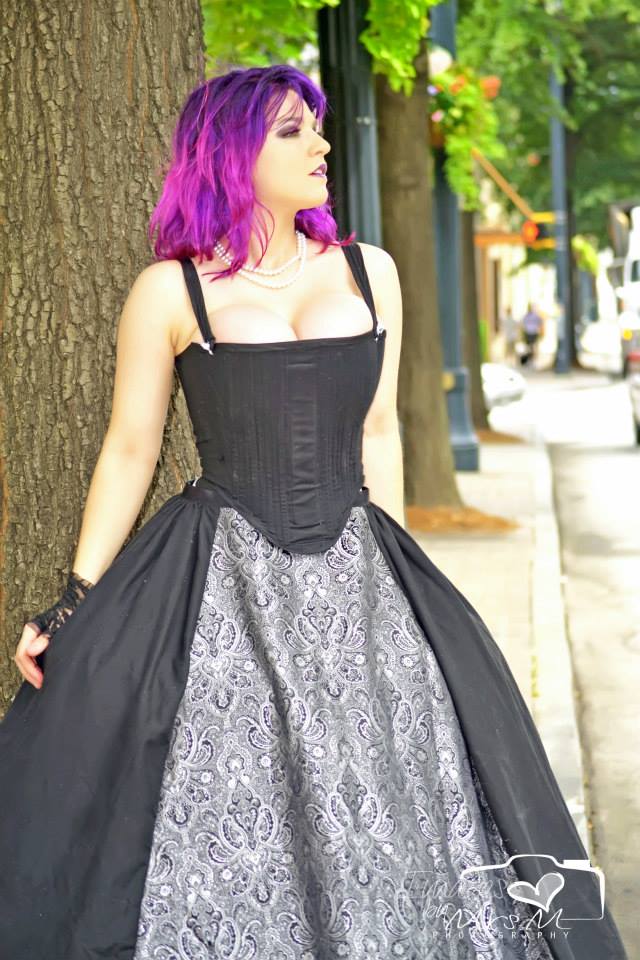
A farthingale is the hooped understructure worn beneath skirts in the 16th and early 17th centuries to create the characteristic dome-shaped or drum-shaped silhouette associated with Tudor and Elizabethan fashion. Understanding the farthingale is essential to understanding why these periods look the way they do.
Types of Farthingale
Spanish Farthingale (1540s–1580s)
The earliest type, originating in Spain and spreading through the courts of Europe. Consists of graduated hoops of willow, cane, or rope sewn into a conical skirt foundation. Creates a smooth, bell-shaped or A-line silhouette widening from the waist to the hem. The skirts of Anne Boleyn's portraits show this style.
French / Wheel Farthingale (1580s–1620s)
The more dramatic later form — a wheel- or drum-shaped structure sitting at the hips and holding the skirts out horizontally. Gives the characteristic flat, table-like hip line of Elizabethan court portraits. The outer skirt was often draped over this wheel and fell straight down from it.
Construction
Historical farthingales were made from fabric stiffened with channels of reeds, rushes, or wire. Modern reproductions use boning wire or cable ties threaded through fabric channels and stitched to a waistband.
Simplicity pattern 2621 includes a hoop skirt / farthingale pattern (view D) along with a corset and shift — it is the pattern Heidi uses as the underpinning for her Tudor gowns.
The Bum Roll
A companion understructure to the farthingale, the bum roll is a padded crescent-shaped roll tied at the back of the waist to add fullness at the back hips. It is softer and less structured than the farthingale and is also included in Simplicity 2621.
Why This Matters for Costuming
A Tudor or Elizabethan gown without the correct underpinnings will not look right, regardless of how beautiful the outer fabric is. The farthingale and corset are what create the period silhouette. Skipping them produces a shapeless look that reads as "fancy dress" rather than genuine historical costume.